
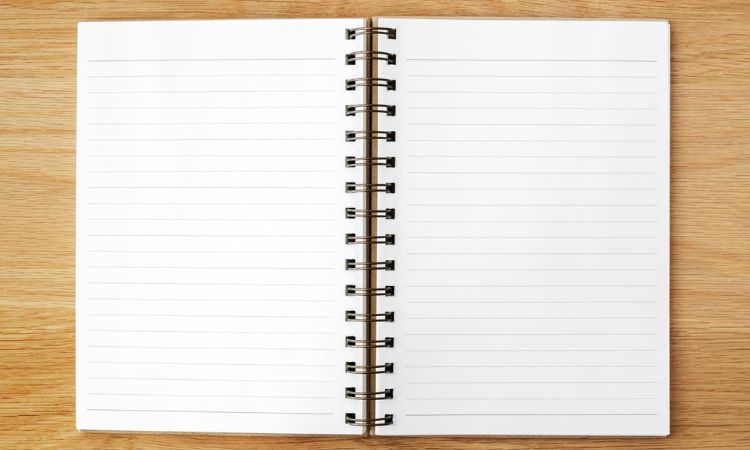
Picking notebook paper looks simple until you open a store shelf full of options. Ruling styles differ, sizes differ, and paper weight changes how ink behaves on the page. If you have ever bought a notebook and felt disappointed once you started writing in it, the paper was probably the reason.
This guide breaks down everything you need to know about notebook paper. You will learn the main paper types, how paper size affects daily use, what paper weight means for writing comfort, and how to match paper to your specific tasks. Whether you are a student, a teacher, a professional, or a business ordering notebooks in bulk, this guide will help you choose paper that actually works for you.
Table of Contents
What Is Notebook Paper and Why Does It Matter?
Notebook paper is paper designed specifically for handwriting inside a bound or spiral notebook. It differs from standard printer paper in thickness, texture, and often in the ruling printed on the page.
Printer paper is built for machines. It runs through a printer smoothly and holds toner or inkjet ink properly. Notebook paper is built for pens and pencils. It should have enough texture to hold writing instruments without feeling harsh and enough body to prevent ink from bleeding through to the next page.
Most paper is made from wood pulp fibers. Sometimes this is mixed with cotton for better-quality journals. The blend impacts the way the paper behaves in your hand and how long it will last.
Good paper improves your writing experience in three ways. It reduces tiredness during long writing sessions. It keeps handwriting readable instead of letting ink spread into blurry lines. It also holds up over months of use, which matters for anyone keeping a daily journal or a work notebook.
You will find paper in classrooms, offices, personal journals, and travel bags. A paper notebook remains one of the few tools that work without batteries, screens, or software updates, which is part of why demand for quality paper notebooks has stayed strong even in a digital-first world.
What Are the Different Types of Notebook Paper?
The main types of notebook paper are wide ruled, college ruled, graph, dot grid, blank, and loose-leaf. Each type supports a particular writing task.
Wide-ruled notebook paper
Wide ruled paper has lines about 9.5 millimeters wide. This is good for younger students or anyone who writes in large handwriting. More space between the lines, easier to form the letters and easier to read.
College-ruled notebook paper
College ruled paper has lines that are closer together, usually around 7.1 millimeters apart. The ruling allows more words per page and is a favorite of high school students, college students, and professionals who write many notes.
Graph, dot grid, blank, and loose-leaf notebook paper
Graph paper has a printed grid. This helps with diagrams, charts, and math work. The dot grid paper gives just a little guidance for bullet journaling and sketching, but without the visual clutter of solid lines. Blank notebook paper is excellent for drawing, mind maps, or informal notes. Loose-leaf paper is not bound, so you can rearrange pages or file them as you wish.
| Type | Best For | Main Benefit |
| Wide ruled | Younger students, larger handwriting | Easier letter formation |
| College ruled | Students, professionals, dense notes | More text per page |
| Graph | Math, diagrams, technical work | Built-in measurement grid |
| Dot grid | Bullet journals, sketching | Guidance without visual clutter |
| Blank | Drawing, informal notes | Full creative freedom |
| Loose-leaf | Filing, reorganizing notes | Pages can be added or removed |
Different paper styles support different writing habits, so matching the ruling to your task makes a real difference in how useful your notes turn out. You can read more about the different types of notebooks if you want a deeper breakdown of binding styles and cover materials. Paper style affects how you write, but size and paper weight also impact comfort and portability.
How Do Notebook Paper Size and Paper Weight Affect Writing?
The size of the notebook paper will decide how much space you have on each page and how easy it is for you to carry the notebook around. Paper weight affects how the ink sits on the page.
Common paper sizes
1. A4: Roughly 210 by 297 millimeters. Common in offices and schools outside the United States.
2. Pad paper size A5: approx. 148 mm x 210 mm. Its size is compact and popular for personal journals and travel notebooks.
3. Letter: 8.5 by 11 inches. The standard notebook paper size in the United States.
4. Legal: 8.5 by 14 inches. Used for longer documents, contracts, and detailed meeting notes.
A4 and letter sizes are great for the desk where you have space to write comfortably. A5 paper is the ideal size for bags and jacket pockets, so if you want to take notes on the go, it is a strong choice. The legal size gives you more space per page, which is perfect for anyone writing long documents by hand.
What does paper weight mean for writing
Paper weights are measured in GSM. GSM stands for grams per square meter. Higher GSM, that means thicker, more durable paper.
Every day, writing with a ballpoint or gel pen works fine on paper around 70 to 90 GSM. Fountain pen users need heavier paper, usually 90 GSM or higher, because fountain pen ink sits wetter on the page and passes through thin paper more easily.
Thin paper causes two common problems: ink bleed, where wet ink soaks through to the back of the page, and transparency, where writing on one side is visible from the other. Both problems make double-sided notebooks harder to read.
| GSM | Recommended Use |
| 60–70 | Basic school notes, pencil use |
| 70–90 | Everyday ballpoint and gel pen writing |
| 90–100 | Fountain pens, light bleed protection |
| 100+ | Heavy ink use, mixed media, sketching |
How Do You Choose the Right Notebook Paper for Your Needs?
The first thing you need to think about when you are looking for the right notebook paper is what you are going to use it for. A student who takes notes every day in class has different needs than a professional who writes reports or a writer who journals every night.
1. School notes: College ruled or wide-ruled paper works best, paired with a lightweight notebook you can take between classes.
2. Office work: Most desk setups can accommodate letter or A4 size, and a durable binding will allow the notebook to lie flat during meetings.
3. Journaling: Dot grid or blank paper gives you flexibility for writing and light sketching, and heavier GSM stops ink bleed if you journal with a fountain pen.
4. Creative writing: Blank or lightly lined pages help avoid visual distractions, so you can focus on drafting without the ruled lines getting in the way.
5. Business branding: Companies will print logos or custom covers on notebooks for client meetings or employee onboarding.
6. Everyday planning: Compact sizes like A5 notebook paper work well for planners you carry during the day.
Notebook selection checklist
- Choose a writing instrument first, because different inks have different paper needs.
- Choose a paper type that suits your task, whether that is ruled, graph, dot grid, or blank.
- Choose a notebook size that is suitable for the environment where you’ll be using it.
- If you are writing on both sides of the page or using fountain pens, check the paper weight.
- Consider durability if the notebook will be traveling with you daily.
- Look for portability, especially for A5 notebook paper and smaller sizes.
- Pick a binding style, as spiral notebooks lie flatter than glue-bound ones.
When you are choosing the right notebook, you have to consider the cover too. Many buyers compare a hardcover notebook vs leather notebook before deciding, as each option impacts durability and price differently. When organizations are buying notebooks for teams or events, they are typically looking at custom notebook options that will fit their branding requirements but maintain the quality of paper in each unit.
What Mistakes Should You Avoid When Buying Notebook Paper?
Many buyers focus on price alone and end up with paper that tears easily or bleeds through with everyday pens. A slightly higher price buys noticeably better paper quality.
Ignoring paper weight is another common mistake. Thin paper feels fine in the store but becomes frustrating once you start writing with a fountain pen or a heavier gel pen.
Selecting the wrong ruling causes problems, too. Wide ruled paper can feel congested for professionals taking detailed notes, while college ruled paper can feel tight for students still developing their handwriting.
Overlooking notebook size leads to notebooks that either do not fit in a bag or feel too small for detailed work at a desk.
Using thin paper with fountain pens almost always causes ink bleed, which ruins both the current page and the one below it.
Finally, many buyers overlook how they’ll actually use the notebook before buying it. A notebook that is great for a desk setup may not be that great for someone who needs to lug it around for travel or fieldwork.
Which Notebook Paper Works Best for Different Writing Tasks?
Matching notebook paper to the task at hand keeps your notes organized and easy to use later.
1. Classroom notes: College ruled or wide ruled paper, depending on grade level and handwriting size.
2. Meeting notes: Letter or A4 size with a firm cover that supports writing without a desk.
3. Daily journaling: Dot grid or blank paper for flexibility between writing and light sketches.
4. Planning and scheduling: Compact sizes like A5 notebook paper that fit into daily bags.
5. Sketches and diagrams: Graph or blank paper that gives room for visual work.
6. Portable notebooks for travel: Smaller, durable notebooks that survive being carried daily. A dedicated travel notebook often uses tougher covers and higher GSM paper to handle regular movement.
Custom notebooks and legal pads are a popular choice for branding at events, client meetings, and employee onboarding. When the paper is consistent, it’s a positive reflection on the organization that’s distributing it.
Notebook Paper vs. Printer Paper: What Is the Difference?
Notebook paper and printer paper serve different purposes, even though both start as similar raw materials.
| Feature | Notebook Paper | Printer Paper |
| Intended use | Handwriting | Machine printing |
| Ruling | Often lined, graphed, or dotted | Blank |
| Paper weight | Varies; higher for ink control | Standard, 75–90 GSM |
| Writing comfort | Textured for pen or pencil grip | Smooth, built for toner or ink |
| Common applications | Notes, journals, sketches | Documents, reports, printing |
Printer paper is made to flow smoothly through the printer and accept ink evenly from the print heads. Notebook paper is made to avoid direct contact with pens and pencils.
Conclusion
When choosing the right notebook paper, you’ll want to consider the size, type, weight, and what you’ll be using the notebook paper for. A student taking class notes has different needs than a professional taking client meetings or a traveler journaling on the road.
Good quality paper is more comfortable to write on by hand and keeps your notes clear for months or years. Custom notebook options are a smart choice for schools, businesses, and organizations that need the same quality of notebook across many units to mix and match dependable paper with their branding.
FAQs
What kind of paper is used for notebooks?
Most of the daily notebooks are made from wood pulp paper. Some of the premium ones have thicker, slicker paper that feels better under your pen and handles the ink better.
Is notebook paper the same as A4 paper?
A4 is only one size of paper. They also have notebooks in A5, Letter, Legal, and a whole lot of other sizes.
Is an A5 notebook good for daily writing?
Many people write in A5 notebooks every day. They are easy to carry and still leave enough space to write.
What paper weight is best for notebook paper?
For most people, paper between 70 and 90 GSM is a good choice. If you write with a fountain pen, thicker paper usually gives cleaner results.